AR automation (Accounts Receivable Automation) uses AI, machine learning, and workflow automation to streamline invoicing, cash application, collections, payment matching, and dispute resolution. Modern AR automation software can reduce Days Sales Outstanding (DSO) by 20–30%, achieve over 95% automatic cash application, improve cash flow visibility, and significantly reduce manual finance operations.
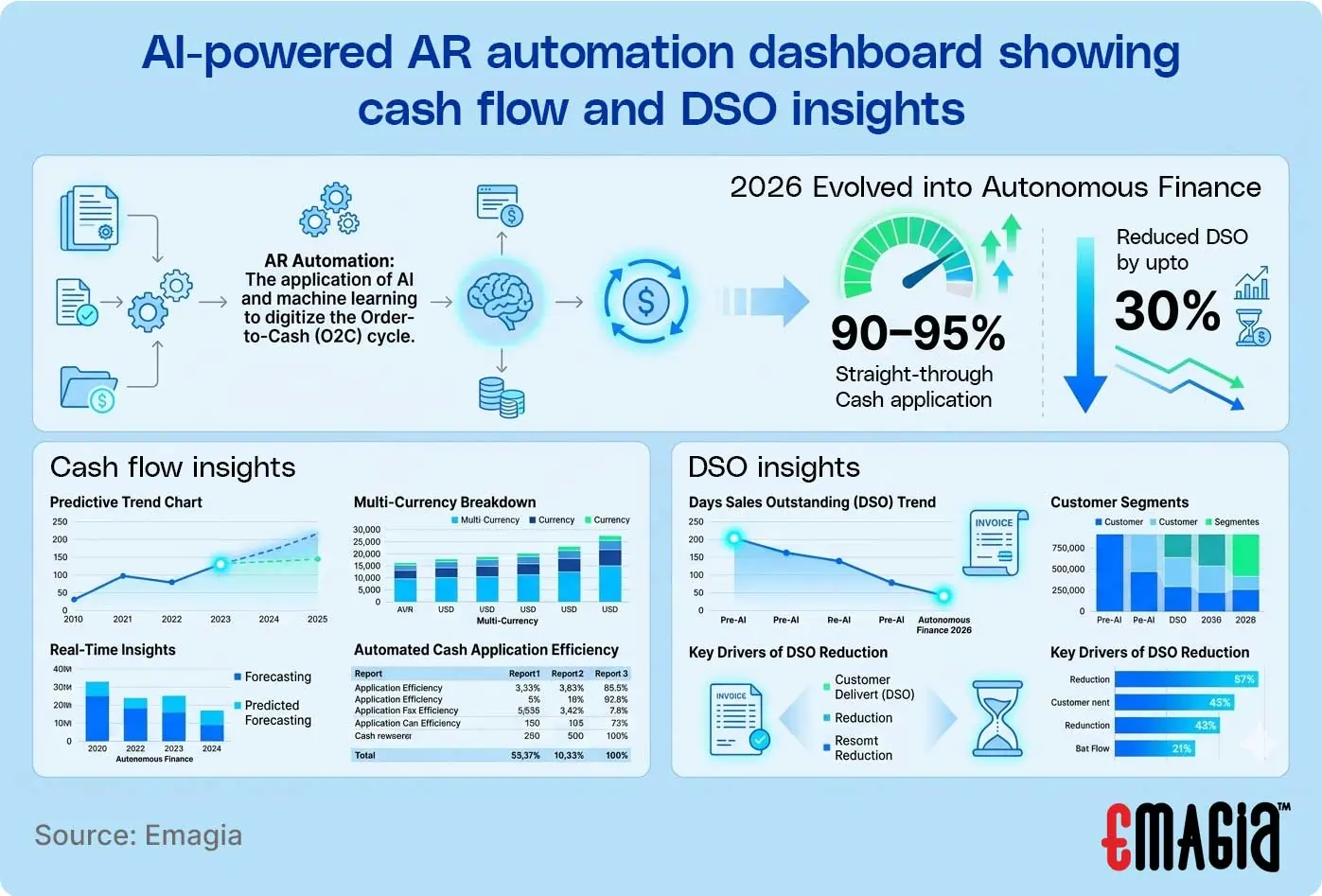
In 2026, enterprises are rapidly adopting Autonomous Finance to replace manual AR processes with AI-driven decision-making systems.
What is AR Automation Software?
AR automation is a technology solution that automates invoicing, payment processing, cash application, and collections to improve cash flow and reduce manual accounting tasks.
- Reduce DSO by 20–30%
- Achieve 90%+ auto cash application
- Improve working capital visibility
How does AR automation improve cash flow?
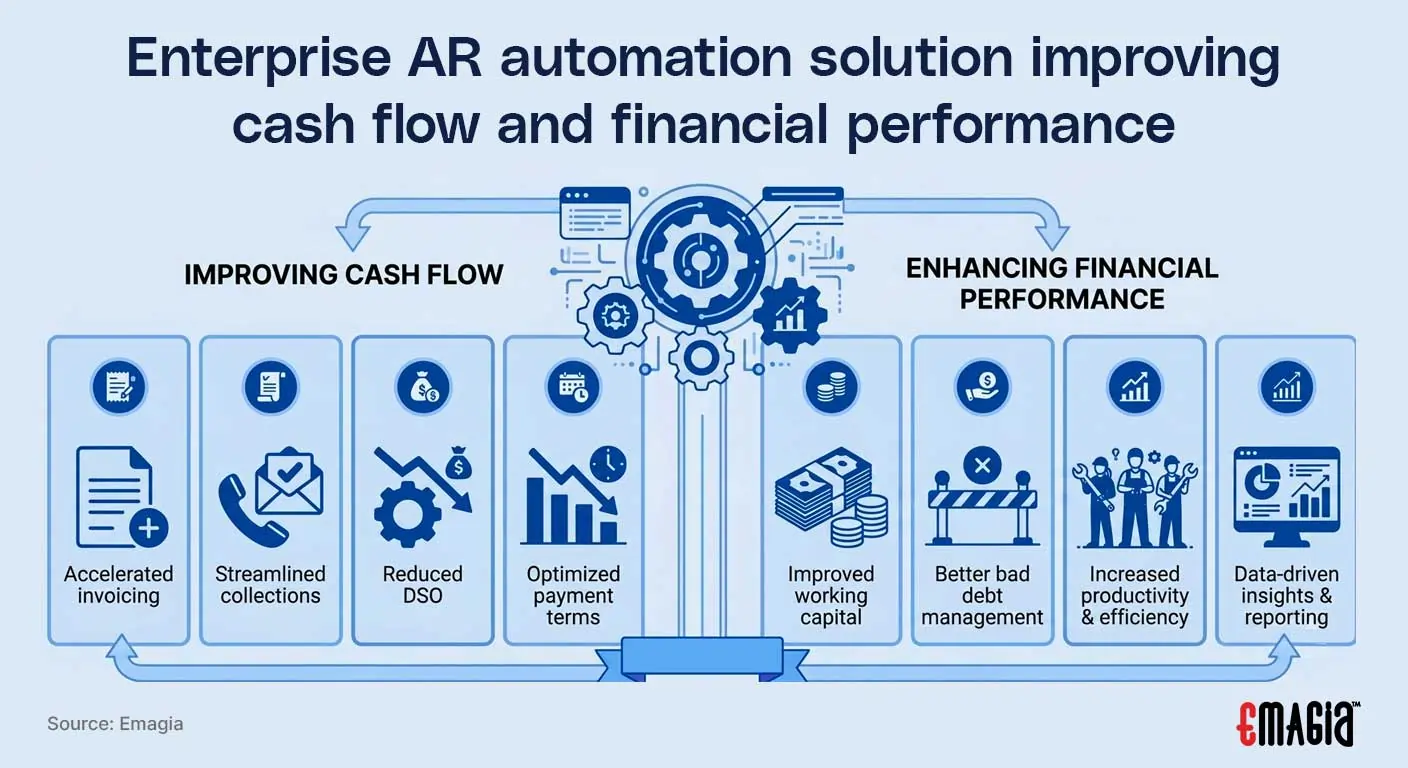
AR automation accelerates invoicing, reduces delays, and improves collections efficiency, resulting in faster cash conversion cycles.
What are the key components of AR automation?
AR automation includes invoice automation, payment processing, cash application, collections management, and analytics.
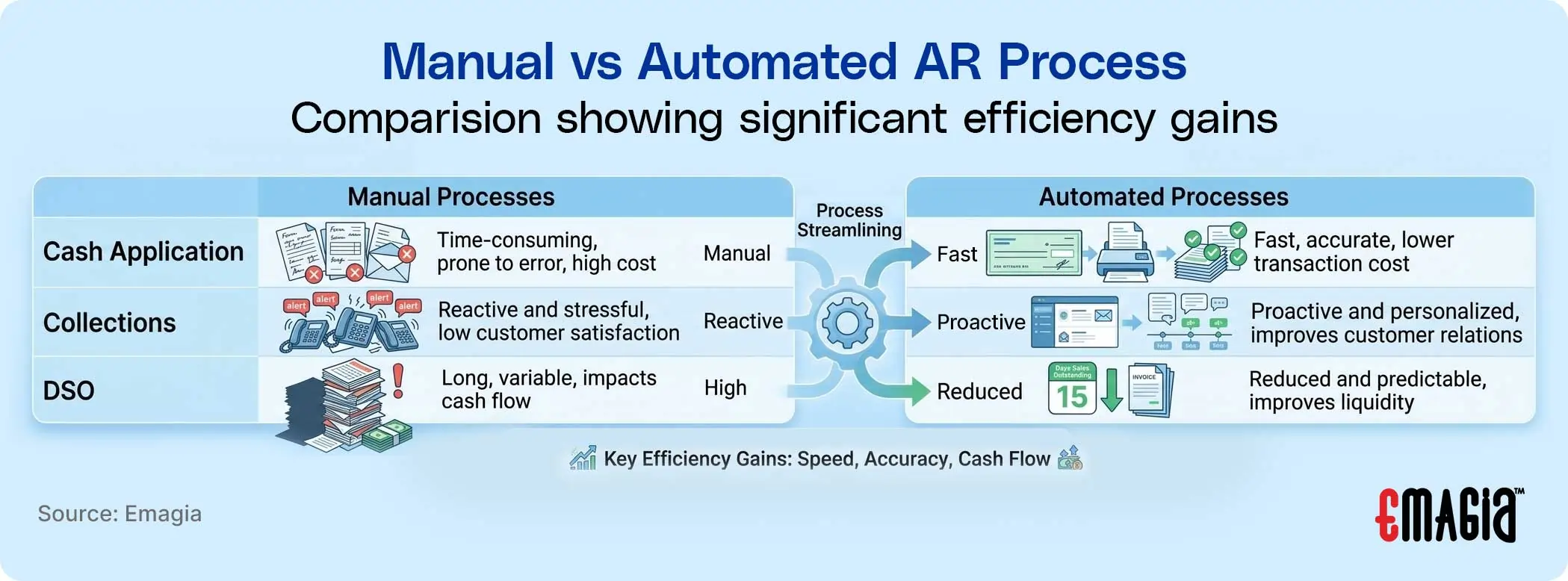
Manual vs Automated AR Processes
| Process | Manual | Automated |
|---|---|---|
| Cash Application | Manual | Automated |
| Collections | Reactive | Proactive |
| DSO | High | Reduced |
See how much you can improve your AR performance.
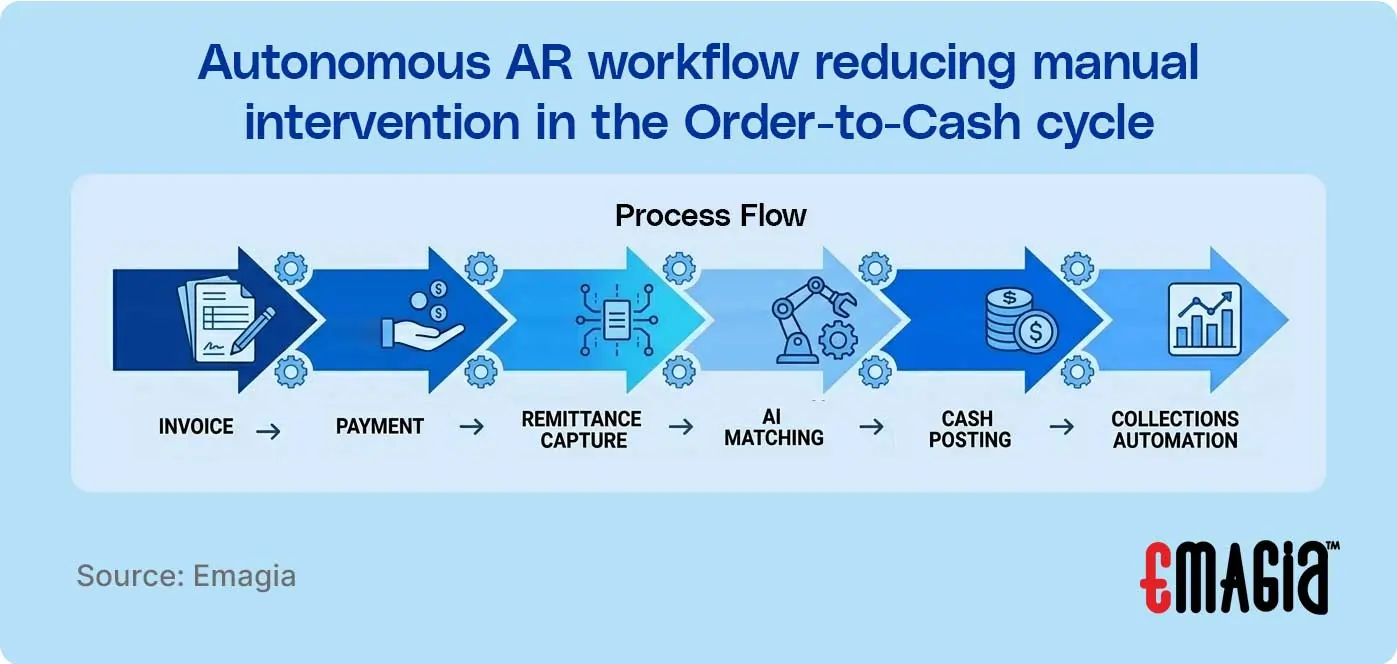
Steps in AR Automation Process
- Data Integration: Sync with ERP systems like SAP, Oracle, or NetSuite
- Digital Invoicing: Automatically deliver invoices via email, EDI, or customer portals
- Smart Payments: Enable ACH, credit cards, and real-time payment options
- AI Remittance Capture: Extract payment data from emails, PDFs, and bank files
- Auto-Match & Post: Apply cash using AI for straight-through processing
- Dynamic Collections: Automate and prioritize collections workflows using AI
Process Flow: Invoice → Payment → Remittance Capture → AI Matching → Cash Posting → Collections Automation
Used by global enterprises to automate billions in receivables and optimize working capital performance.
Proven Business Outcomes
- Reduce DSO by up to 30%
- Achieve 95%+ auto cash application
- Reduce manual effort by 50%
- Improve collections efficiency significantly
- Reduce unapplied cash by up to 80% using AI-driven matching
“By shifting to autonomous AR, we reduced unapplied cash from 15% to under 2% within six months.”
— Global Controller, Fortune 500 Manufacturing Company
Why CFOs Invest in AR Automation
- Strategic talent reallocation from manual AR tasks to financial analysis
- Real-time liquidity forecasting for better investment and M&A decisions
- Mitigation of bad debt risk using AI-driven credit scoring
- Improved financial visibility across global shared services operations
Understanding AR Automation
AI-driven automation enables straight-through processing and eliminates manual intervention in high-volume AR operations.
AR automation streamlines invoicing, collections, and cash application using AI and workflows. It is a core part of Order-to-Cash automation, enabling faster cash cycles, reduced manual effort, and improved financial visibility.
AR Automation Summary
AR automation uses AI and workflows to streamline invoicing, collections, and cash application. It improves cash flow, reduces DSO, and enhances financial visibility for enterprises.
Key Components of AR Automation
- Invoice Generation and Distribution: Automating the creation and dissemination of invoices ensures timely and accurate billing, which can expedite optimize the order-to-cash cycle. Modern systems can automatically generate invoices in multiple formats (PDF, EDI, or email) based on customer preferences.
- Payment Processing: Automated systems facilitate various payment methods, including credit cards, ACH, wire transfers, and digital wallets, providing customers with convenient options and ensuring prompt payment processing.
- Cash Application: Automation collects data from multiple payment sources, including remittance emails, bank files, and online portals, accelerating cash posting directly into the ERP system. Learn more about Cash Application Automation.
- Collections Management: Automated workflows enable proactive collection strategies, prioritize daily task lists, and resolve disputes efficiently, thereby optimize collections automation processes. Notifications and reminders can be customized for each customer segment.
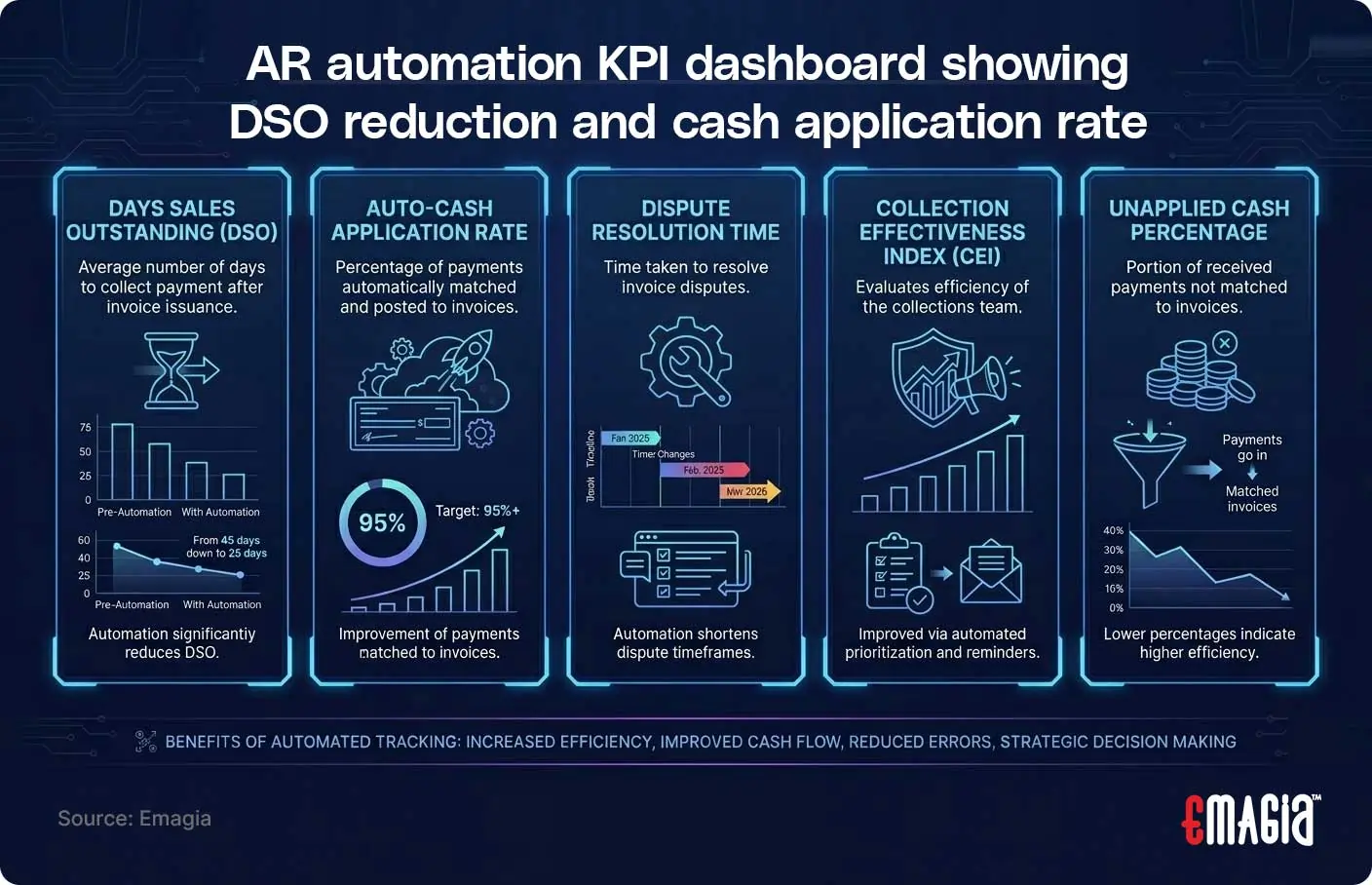
- Reporting and Analytics: Real-time reporting on invoices, payments, and outstanding balances allows businesses to monitor cash flow, forecast revenue, and identify delinquent accounts promptly. Integration with dashboards provides KPIs like DSO, unapplied cash percentage, and collection effectiveness index (CEI).
Key Metrics and KPIs in AR Automation
- Days Sales Outstanding (DSO): Measures the average number of days it takes to collect payment after an invoice is issued. Automation can reduce DSO significantly.
- Auto-Cash Application Rate: Percentage of payments automatically matched and posted to invoices without manual intervention.
- Dispute Resolution Time: Time taken to resolve invoice disputes; automation can shorten this timeframe.
- Collection Effectiveness Index (CEI): Evaluates the efficiency of the collections team, improved via automated prioritization and reminders.
- Unapplied Cash Percentage: Measures the portion of received payments not matched to invoices; lower percentages indicate higher efficiency.
How Emagia Transforms AR Automation
Emagia offers an AI-powered AR automation platform designed to integrate seamlessly with leading ERP systems, including SAP, Oracle, NetSuite, PeopleSoft, and MS Dynamics. The platform encompasses various modules such as Credit, Receivables, Collections, Deductions, Cash Application, and a Customer EIPP portal, all aimed at enhancing AR processes.
AI-driven automation can reduce unapplied cash by up to 80% and significantly improve straight-through processing rates.
Key Benefits of Emagia’s AR Automation Solution:
- Accelerated Customer Onboarding: Automates credit decisions, reducing credit processing time from days to hours, thereby onboarding customers five times faster.
- Improved Cash Flow: Achieves over 95% auto-cash posting rates and reduces DSO by up to 30%.
- Enhanced Productivity: Automates lower-level tasks, freeing up resources for higher-level activities and ensuring maximum productivity with intelligent analytics.
- Superior Customer Experience: Provides a comprehensive Customer EIPP portal, facilitating seamless interactions and improving overall customer satisfaction.
- Predictive Insights: AI-powered analytics predict payment delays, flag high-risk accounts, and optimize collection strategies, ensuring better cash management.
By Autonomous Finance solutions for enterprise AR, businesses can not only automate their AR processes but also gain a competitive edge in the marketplace by enhancing operational efficiency and building stronger customer relationships.
Benefits of Implementing AR Automation
- Improved Cash Flow: Reduce Days Sales Outstanding (DSO) by up to 30% and accelerate cash inflows through automated invoicing and collections.
- Enhanced Accuracy: Achieve over 95% auto-cash application accuracy and eliminate manual reconciliation errors.
- Cost Savings: By automating repetitive tasks, businesses can reduce operational costs, lower the need for manual labor, and allocate resources to more strategic activities.
- Better Customer Relationships: Automation leads to fewer billing disputes, faster resolution of issues, and consistent communication, resulting in improved customer satisfaction and trust.
- Regulatory Compliance: Automated systems provide audit trails, detailed payment histories, and accurate reporting, ensuring compliance with financial regulations and industry standards.
Industry-Specific Benefits of AR Automation
- Manufacturing: Improves global collections and reduces invoice disputes across regions
- Healthcare: Accelerates claims processing and reduces payment delays
- Financial Services: Enhances compliance and improves cash forecasting accuracy
Implementing AR Automation: Best Practices
- Assess Current AR Processes: Evaluate existing accounts receivable automation to identify inefficiencies, bottlenecks, and areas that would benefit most from automation.
- Choose the Right AR Automation Software: Select a solution that integrates seamlessly with your ERP and financial systems, supports multiple payment methods, and offers advanced analytics capabilities.
- Set Clear Objectives: Define specific goals for automation, such as reducing Days Sales Outstanding (DSO), increasing auto-cash application rates, or minimizing unapplied payments.
- Train Employees: Ensure staff are adequately trained to use the new automated systems effectively, emphasizing benefits such as reduced manual tasks and faster reconciliation.
- Monitor and Optimize: Continuously monitor system performance and KPIs, adjusting workflows, credit rules, and automated notifications to maintain efficiency. Leverage analytics for data-driven decision-making and process improvement.
Challenges in AR Automation and How to Overcome Them
- Integration Issues: Difficulty integrating AR automation software with legacy ERP systems can hinder implementation. Mitigation includes selecting compatible solutions and working with experienced implementation partners.
- Change Management: Employees may resist transitioning from manual to automated processes. Comprehensive training, communication, and showcasing quick wins can facilitate smoother adoption.
- Data Accuracy: Inaccurate or incomplete data can lead to errors in automated workflows. Implementing data validation checks, standardized templates, and periodic audits ensures data integrity.
- Customer Adoption: Customers unfamiliar with automated portals may resist digital payment or EIPP systems. Providing clear instructions, self-service support, and incentives can improve adoption rates.
Future Trends in AR Automation
Enterprises are now moving toward fully autonomous finance operations where minimal human intervention is required across the O2C cycle.
- Artificial Intelligence and Machine Learning: AI evaluates customer credit risk profiles, predicts late payments, and recommends collection actions, enabling smarter decision-making and reduced bad debt.
- Robotic Process Automation (RPA): RPA automates repetitive tasks like data entry, invoice matching, and payment reconciliation, reducing errors and increasing operational efficiency.
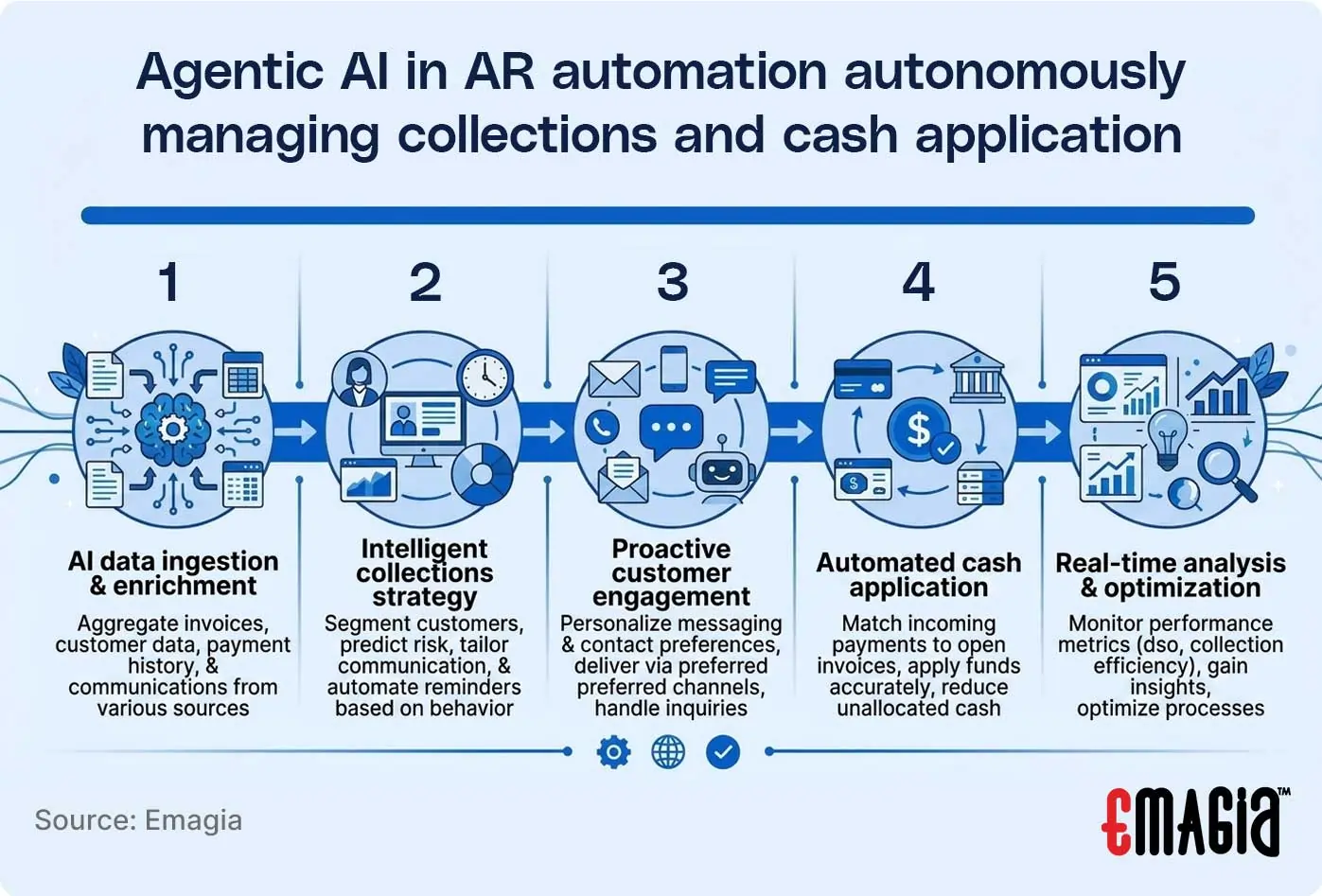
- Agentic AI in AR Automation: AI agents can autonomously communicate with customers, negotiate payment plans within defined policies, and update ERP systems without human intervention, enabling fully autonomous finance operations.
- Enhanced Analytics and Predictive Insights: Advanced analytics provide real-time dashboards of AR KPIs, track payment behaviors, and forecast cash inflows to optimize working capital management.
- Integration with Digital Payment Platforms: Modern AR automation increasingly integrates with digital wallets, ACH networks, and instant payment systems, providing more flexibility for customers and faster collections for businesses.
Agentic AI vs Traditional RPA in AR Automation
| Capability | Traditional RPA | Agentic AI |
|---|---|---|
| Decision Making | Rule-based | AI-driven, adaptive |
| Collections | Predefined reminders | Autonomous negotiation & communication |
| Cash Application | Structured data only | Handles unstructured data (emails, PDFs) |
| Scalability | Limited by rules | Continuously learns and improves |
Key Takeaways
- AR automation reduces DSO by 20–30%
- Improves cash flow and working capital
- Achieves 90%+ auto cash application
- Enables predictive collections using AI
Ready to Transform Your AR Process?
Discover how AI-powered AR automation can reduce DSO and accelerate cash flow.
Trusted by global enterprises to transform accounts receivable and optimize working capital performance.
FAQs About AR Automation
What is AR automation, and why is it important?
AR automation refers to the use of technology to streamline accounts receivable processes, such as invoicing, payment processing, and cash application. It is important because it reduces manual errors, accelerates cash flow, and enhances operational efficiency.
How does AR automation work?
AR automation works by integrating with a company’s existing ERP or accounting systems to automate repetitive tasks like invoice generation, payment reminders, and reconciliation. Advanced technologies like AI and RPA further optimize the process.
What are the main benefits of AR automation?
The main benefits include improved cash flow, reduced operational costs, enhanced accuracy, better customer relationships, and streamlined compliance with financial regulations.
Can AR automation integrate with my current ERP system?
Yes, most AR automation solutions are designed to integrate seamlessly with popular ERP systems like SAP, Oracle, NetSuite, and MS Dynamics. Ensure compatibility before implementation.
What challenges might I face when implementing AR automation?
Common challenges include integration issues, employee resistance to change, and data accuracy concerns. These can be addressed with careful planning, training, and regular system audits.
How does AI enhance AR automation?
AI enhances AR automation by enabling intelligent data analysis, predicting payment behaviors, identifying credit risks, and automating decision-making processes, such as prioritizing collections.
What industries benefit the most from AR automation?
Industries with high volumes of transactions, such as retail, manufacturing, healthcare, and financial services, benefit significantly from AR automation due to its ability to handle complex accounts receivable processes efficiently.
Is AR automation suitable for small businesses?
Yes, AR automation is suitable for businesses of all sizes. Many solutions offer scalable options tailored to the specific needs and budgets of small and medium-sized businesses.
How long does it take to implement an AR automation system?
Implementation timelines vary depending on the complexity of your current AR processes and the software selected. On average, it can take a few weeks to several months.
What is the cost of AR automation software?
The cost of AR automation software depends on the features, scalability, and provider. Some solutions offer subscription-based pricing, while others may require an upfront investment.
Can AR automation improve customer satisfaction?
Yes, by reducing errors, resolving disputes faster, and providing a seamless payment experience, AR automation significantly improves customer satisfaction.
By adopting AR automation, businesses can transform their accounts receivable processes, improve cash flow, and enhance overall operational efficiency. As technology continues to evolve, staying ahead with tools like AR automation will be essential for maintaining a competitive edge. Platforms like Emagia provide comprehensive solutions, empowering organizations to achieve these goals and more.
Common Questions About AR Automation
- What is AR automation software?
- How does AR automation reduce DSO?
- What are the key benefits of AR automation?
- How does AI improve cash application?
Explore our Cash Application Automation solution.