Who Is a Payee? Definition, Payee vs Payer, and B2B Payment Examples
Key Takeaways
- A payee is the person or organization receiving payment.
- A payer sends money, while a payee receives it.
- Payees can be individuals, businesses, suppliers, contractors, or government agencies.
- Payees appear in checks, invoices, ACH transfers, wire transfers, and other payment methods.
- Accurate payee information helps prevent fraud and payment errors.
Quick Answer: A payee is the person, business, or organization that receives payment in a financial transaction. The party sending the money is called the payer (or payor). Payees can receive payments through checks, invoices, ACH transfers, wire transfers, payroll deposits, and other payment methods.
What Is a Payee? A Clear, Search-Optimized Definition
A payee is the person, business, or organization that receives payment in a financial transaction. Whether the payment is made by check, invoice, ACH transfer, wire transfer, or digital payment, the payee is the intended recipient of funds.
The party sending the money is known as the payer (or payor), while the payee receives the payment. Understanding the distinction helps avoid confusion in banking, accounting, and business transactions.
Payees can be individuals, companies, government agencies, nonprofits, vendors, contractors, or any entity authorized to receive funds.
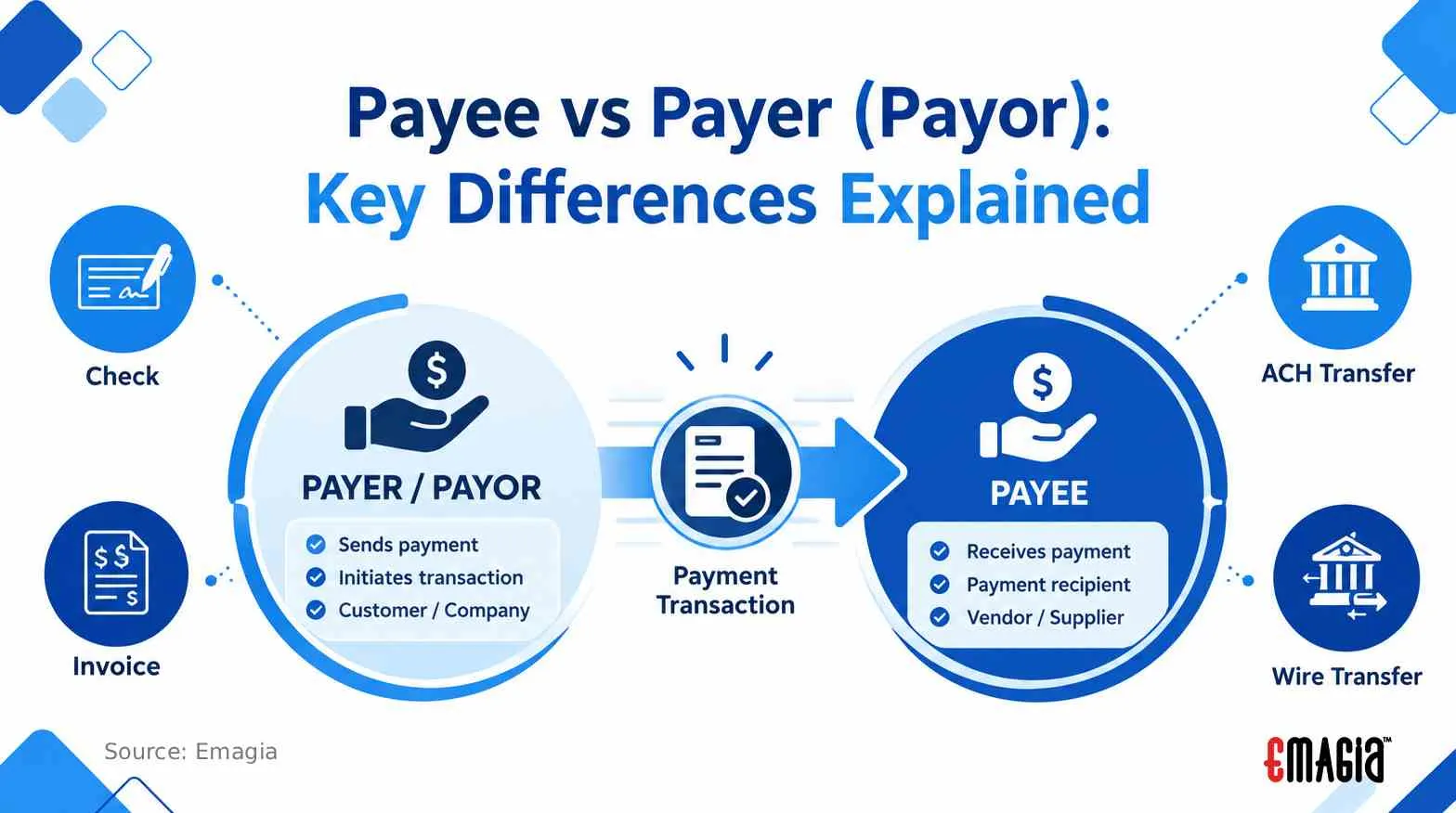
Payee vs Payer (Payor): Key Differences Explained
The easiest way to understand a payee is to compare it with a payer. Every payment transaction involves both parties.
| Feature | Payee | Payer (Payor) |
|---|---|---|
| Role | Receives payment | Sends payment |
| Check Payment | Name written on the check | Person issuing the check |
| Invoice Payment | Vendor receiving payment | Customer making payment |
| ACH Transfer | Receiving account holder | Sending account holder |
| Wire Transfer | Beneficiary receiving funds | Originator sending funds |
| Business Transactions | Supplier, employee, contractor, or customer receiving funds | Company making payment |
Learn more about the differences between a payer and payee in business and financial transactions.
Payee Meaning in English and Banking
The payee meaning in English is “the recipient of payment.” In financial contexts, the payee definition banking refers to the party listed on a payment instrument, such as a check or bank transfer, who is legally entitled to the funds.
If you are wondering what is the meaning of payee or what does a payee mean, it always refers to the recipient of payment, not the person paying.
Is the Payee the Person Receiving the Money?
Yes. Many ask, is the payee the person receiving the money? The answer is yes. The payee is not the person paying; that role belongs to the payer or payor.
Another common question is is payee the recipient? Again, yes. The payee and the payment recipient are the same party.
Who Is the Payee in Different Payment Scenarios?
Understanding who is payee depends on context. The identity of the payee changes based on the type of transaction.
Who Is the Payee on a Check?
If you are asking who is the payee on a check or who is payee on check, the payee is the person or business whose name appears on the “Pay to the order of” line.
The check payee meaning is clear: it is the party legally authorized to deposit or cash the check.
When someone searches what does payee mean on a check, it refers to the name written on the check as the intended recipient.
Who Is a Payee of a Cheque?
In formal terminology, who is a payee of a cheque refers to the individual or entity written as the beneficiary on the instrument.
The payee of check must endorse it to access funds. This confirms the legitimacy of the transaction.
Who Is the Payee in a Bank Transfer?
When asking who is the payee in a bank transfer or who is the payee on a bank transfer, the payee is the account holder receiving funds.
Electronic payment methods such as ACH payments and wire transfers rely on accurate payee information to ensure funds reach the correct recipient.
The payee bank account details, including routing and account numbers, ensure accurate transfer.
Payee Examples Across Different Payment Types
Many organizations use electronic payment methods such as ACH payments and wire transfers to send funds efficiently and securely.
| Payment Type | Who Is the Payee? | Example |
|---|---|---|
| Check | The person or business named on the check | ABC Consulting receives a client payment |
| Invoice | The vendor or supplier receiving payment | Software provider receives payment for services |
| ACH Transfer | The receiving bank account holder | Employee receives payroll through direct deposit |
| Wire Transfer | The beneficiary receiving funds | Supplier receives international payment |
| Refund Payment | The customer receiving funds | Customer receives product refund |
| Accounts Payable Payment | Vendor or contractor receiving payment | Manufacturer pays raw material supplier |
What Is a Payee Bank Account?
What is a payee bank account? It is the financial account designated to receive funds in a transfer. The payee account number uniquely identifies where money should be deposited.
Payee and Payer vs Payee: Clarifying the Difference
The distinction between payer vs payee is fundamental. The payer initiates the payment. The payee receives it.
If you are asking is the payee the person who pays, the answer is no. The payee does not pay; they receive funds.
In short:
- Payor or payer: sends money.
- Payee: receives money.
Payee Name: Meaning, Importance, and Accuracy
The payee name is the official name of the recipient as written on a payment instrument.
Many people ask what does payee name mean or meaning of payee name. It refers to the legally recognized name of the individual or organization entitled to the funds.
What is name of payee? It is simply the written identification of the recipient.
Payee Address Meaning
The payee address means the physical or mailing address associated with the payee. In some transactions, the payee address meaning is important for verification and compliance.
What Are Payees in Business Context?
In enterprise finance, payees are commonly managed within accounts payable, vendor management, procurement, treasury, and payment reconciliation workflows.
If you are asking what are payees or seeking the payees meaning, in business they typically include vendors, employees, contractors, and customers receiving refunds.
Organizations often use accounts payable processes and automated payment systems to manage large numbers of payees efficiently.
Payees are all entities receiving funds from a company.
Payee Defined in Corporate Finance
In enterprise accounting, payee defined refers to any individual or entity listed in accounts payable or disbursement systems as a recipient.
This precise definition for payee ensures compliance and audit accuracy.
Can a Payee Be a Business?
Yes. A payee can be an individual, business, nonprofit organization, government agency, supplier, contractor, or any entity receiving funds.
In B2B transactions, payees commonly include:
- Vendors receiving invoice payments
- Suppliers receiving purchase order payments
- Contractors receiving service fees
- Employees receiving payroll
- Customers receiving refunds or rebates
Large enterprises often maintain thousands of active payees within their accounts payable and payment management systems.
Is a Payee a Beneficiary?
A common question is is a payee a beneficiary? In many financial contexts, yes. However, in legal or insurance terms, a beneficiary may have additional rights beyond simply receiving payment.
Payee Rights and Responsibilities in B2B Payments
Many organizations use automated accounts receivable automation and payment processing systems to manage payee information more accurately.
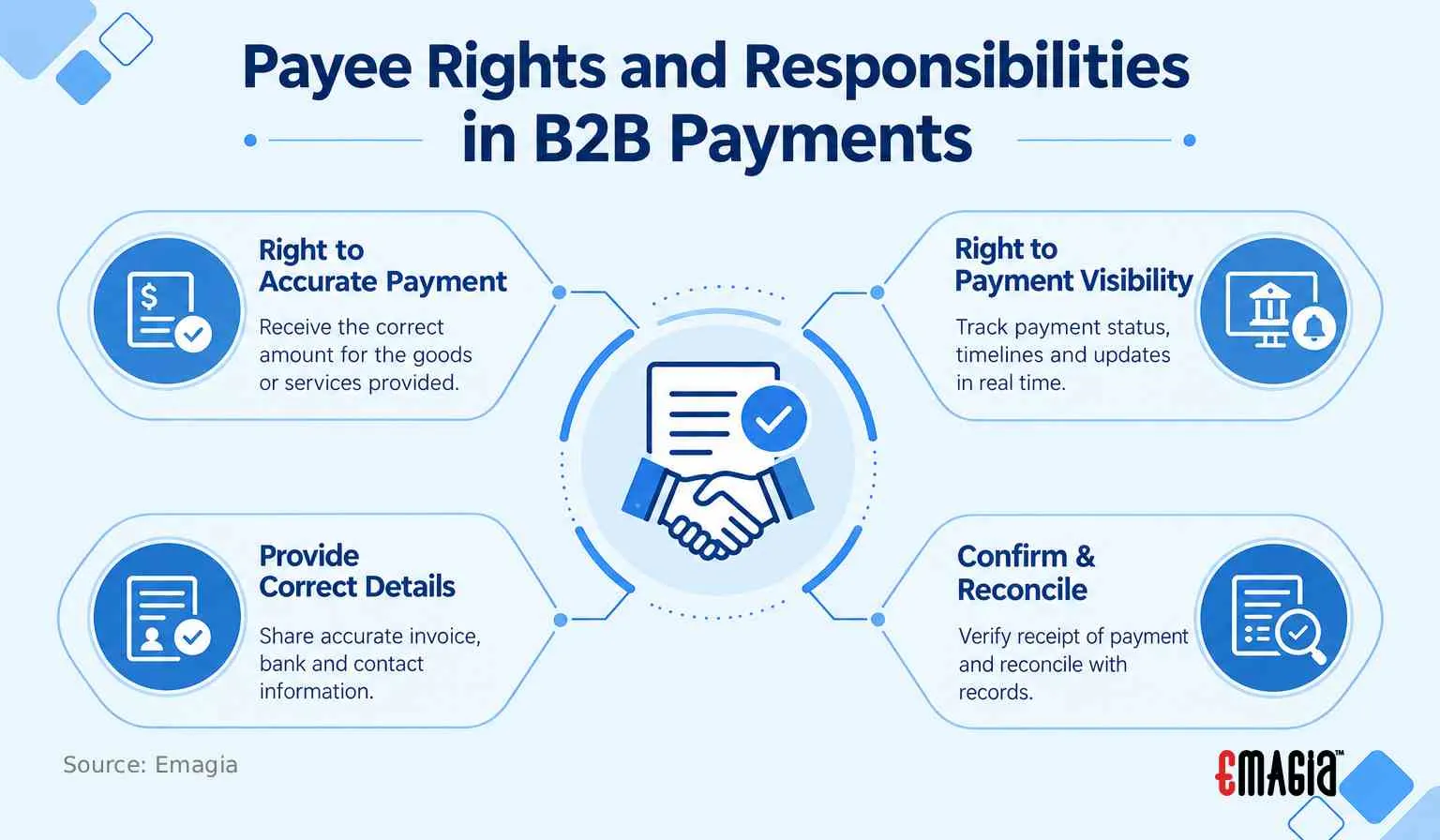
In business-to-business transactions, payees have both rights and responsibilities that help ensure accurate and compliant payment processing.
Payee Rights
- Receive payment according to agreed contract terms
- Receive accurate remittance information
- Dispute underpayments or payment discrepancies
- Access transaction records and payment confirmations
Payee Responsibilities
- Provide accurate banking and payment information
- Maintain tax and compliance documentation
- Reconcile incoming payments against invoices
- Promptly report payment errors or fraud concerns
Strong payee management processes help reduce payment delays, fraud risks, and reconciliation issues for both payers and recipients.
Special Scenarios: Account Payee and SSI Context
What is account payee? An account payee check is one that must be deposited into the named payee’s bank account and cannot be cashed over the counter.
In specific cases such as dss being payee over ssi check, a designated representative may act as payee to manage funds for someone unable to do so independently.
How Businesses Manage Payees at Scale
As organizations grow, managing payee information becomes increasingly complex. Businesses may process payments to thousands of vendors, suppliers, contractors, and customers across multiple payment channels.
Accurate payee data is essential for preventing fraud, avoiding payment delays, supporting compliance, and improving cash flow visibility.
How Emagia Helps
Accurate payment reconciliation depends on matching incoming funds with invoices and remittance information. Learn more about payment reconciliation.
In enterprise environments, accurate payee management is critical for secure and efficient transactions. Emagia’s AI-powered Order-to-Cash platform enhances payee identification, validation, and reconciliation processes.
The platform centralizes customer data, validates incoming payment references, and automatically matches payments to invoices. This ensures that when your organization acts as a payee, funds are applied accurately and promptly.
Emagia reduces risks related to incorrect payee account numbers, duplicate vendor records, and misapplied cash. With predictive analytics and automation, businesses gain visibility into payment flows and minimize operational friction.
Enterprise use cases include:
- Automated cash application and payment matching
- Vendor master data validation
- Fraud risk reduction in digital transfers
- Real-time payment reconciliation dashboards
This structured approach ensures financial clarity while maintaining compliance and operational efficiency.
Frequently Asked Questions About Payees
What is the difference between a payee and a payer?
A payee receives money, while a payer sends money. Every financial transaction involves a payer and a payee.
Who is the payee on a check?
The payee is the individual or organization whose name appears on the “Pay to the Order Of” line and is authorized to receive the funds.
Can a payee be a business?
Yes. A payee can be an individual, company, supplier, nonprofit organization, government agency, or any entity receiving payment.
What is a payee in an ACH transfer?
In an ACH transaction, the payee is the account holder receiving funds electronically.
Quick Summary
- A payee is the recipient of funds in a financial transaction.
- A payer sends money, while a payee receives it.
- Payees can be individuals, businesses, vendors, contractors, or government agencies.
- Payees are commonly involved in checks, invoices, ACH transfers, wire transfers, and refund payments.
- Accurate payee information is essential for compliance, fraud prevention, and payment reconciliation.
Related Terms: Payer, Payor, Accounts Payable, ACH Payment, Wire Transfer, Beneficiary, Payment Reconciliation.
Conclusion: Understanding the Role of a Payee
A payee is the individual, business, or organization authorized to receive funds in a financial transaction. Whether payments are made through checks, invoices, ACH transfers, wire transfers, or digital payment methods, accurate payee information is essential for secure and efficient payment processing.
Understanding the distinction between payees and payers helps individuals and businesses reduce errors, improve reconciliation, strengthen financial controls, and ensure funds reach the intended recipient.


