Credit management software is transforming how businesses handle their finances. It offers tools to manage credit risk and optimize cash flow.
These solutions are essential for businesses aiming to improve financial efficiency. They automate invoicing, payment reminders, and collections, saving time and reducing errors.
The credit management software market is expanding rapidly. This growth is driven by the need for efficient financial management solutions.
Integration with financial planning software provides a comprehensive view of financial health. This integration helps businesses make informed decisions.
Debt management tools and loan management systems are key components. They streamline processes and enhance financial stability.
Choosing the right software can significantly impact a business’s financial performance. It offers a competitive edge in today’s fast-paced market.
Understanding Credit Management Software
Credit management software plays a vital role in modern finance. It helps businesses manage credit and minimize risks effectively.
The software is designed to automate and streamline credit-related processes. This includes invoicing, credit scoring, and collections.
By using such tools, companies can improve cash flow and reduce bad debt. The software provides real-time data for informed decision-making.
Key Features:
-
Automated invoicing and payment reminders
-
Credit scoring and risk assessment
-
Reporting and analytics tools
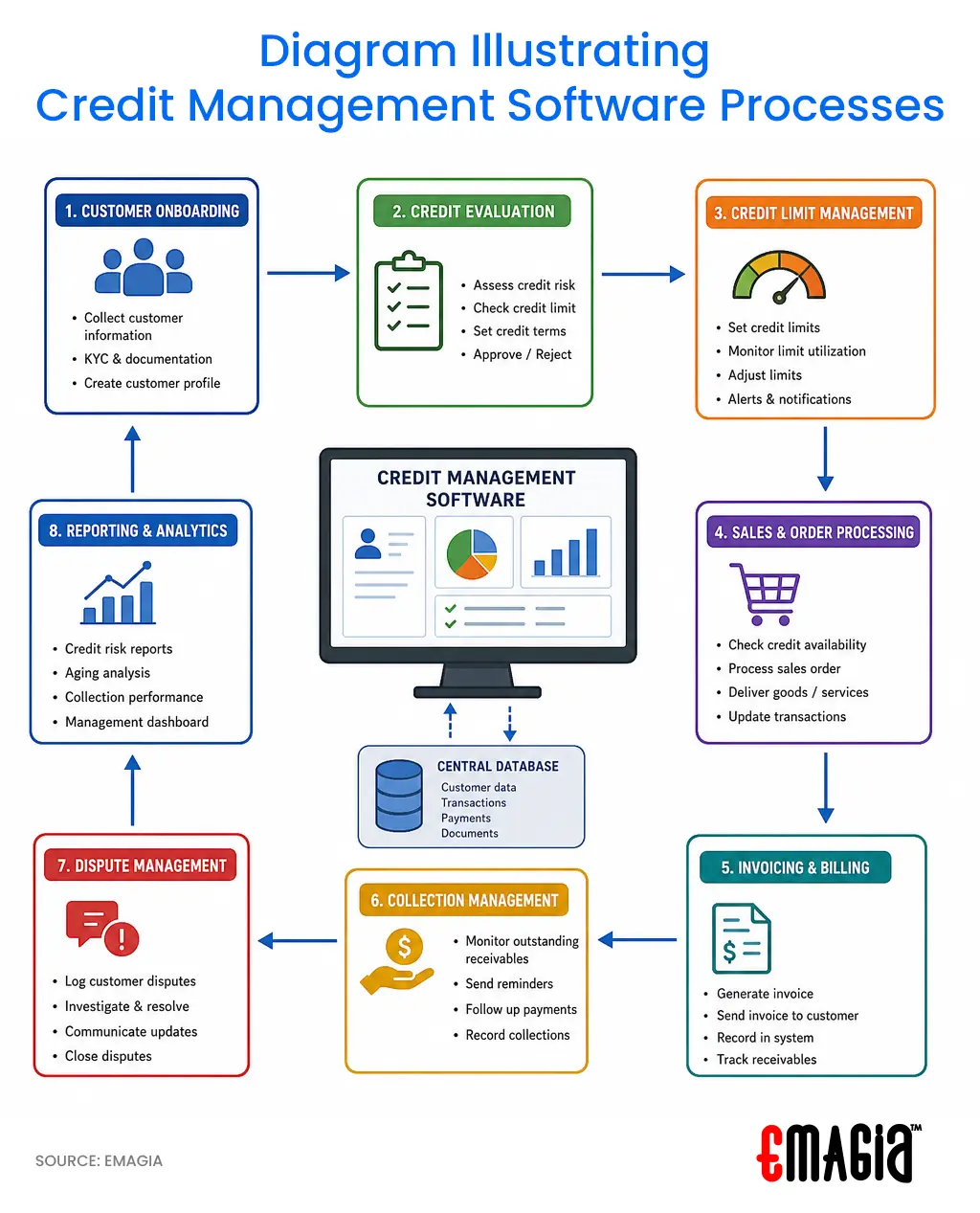
These features ensure efficient credit management and better financial outcomes. Such software is valuable for both small businesses and large enterprises.
Additionally, integrating it with other financial systems can enhance its effectiveness. This can lead to better compliance and operational efficiency.
The Growing Credit Management Software Market
The credit management software market is expanding rapidly. Businesses are increasingly seeking efficient financial solutions. This growth is driven by a need for robust financial control.
Technological advancements have played a big role in this market’s growth. Integration with other financial planning tools is a crucial factor. Companies want seamless operations and unified financial management.
Reasons for Market Growth:
-
Rising demand for automation and efficiency
-
Increasing need for risk management
-
Expanding global business operations
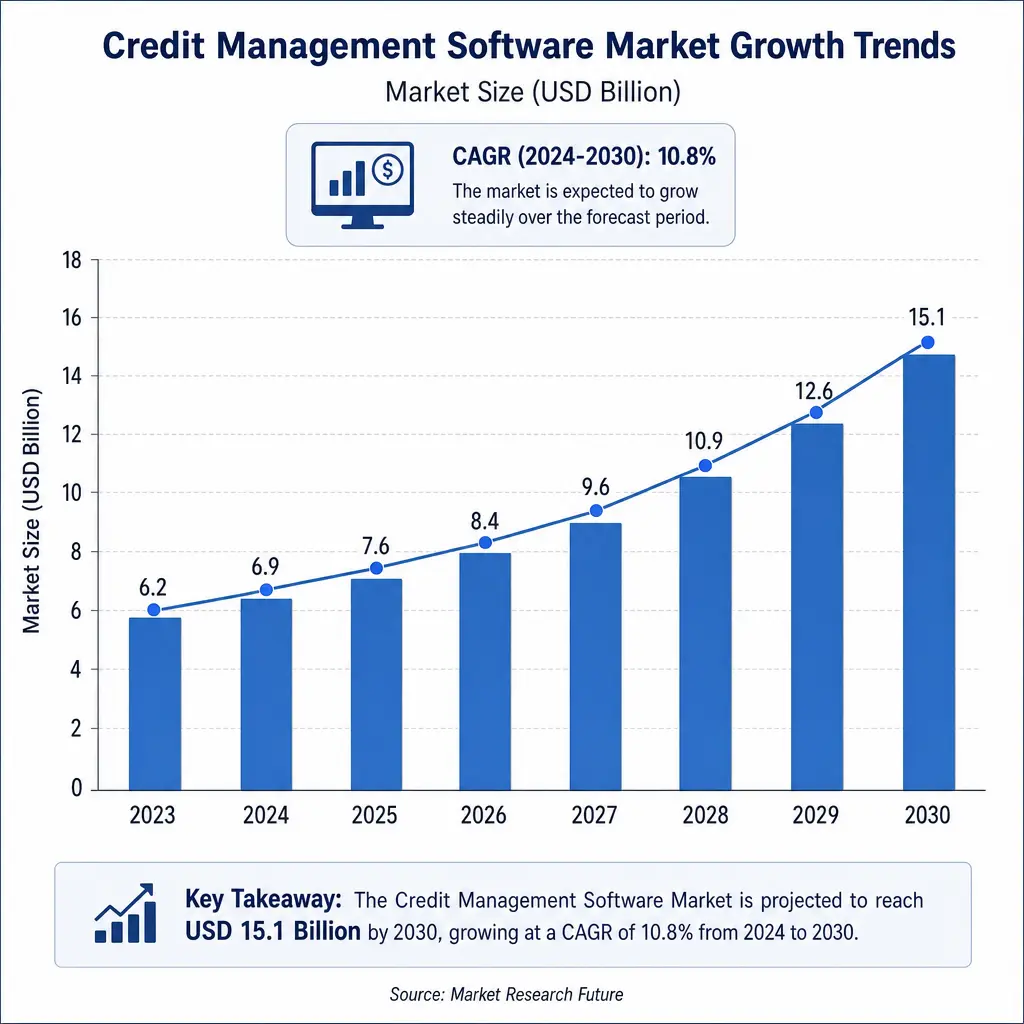
Moreover, diverse industries adopt these solutions for tailored needs. From retail to finance, credit management software is indispensable. As market demand rises, software features continuously evolve. This evolution ensures alignment with modern financial challenges.
Key Features of Credit Management Software Solutions
Credit management software solutions boast numerous features. These features facilitate efficient handling of credit processes. They help businesses control cash flow and minimize risks.
Automation is a standout feature. It reduces manual effort and errors. Tasks like invoicing and payment collection become automated.
Integration capabilities add immense value. These solutions often link seamlessly with accounting and CRM systems. Such integration ensures fluid financial operations.
Common Features:
-
Credit scoring and risk assessment
-
Automated reminders and alerts
-
Customizable dashboards and reporting
Predictive analytics is another powerful tool. It helps forecast credit risks and trends. Decision-makers can plan better with these insights.
Security features protect sensitive data. In today’s digital age, robust data protection is essential. Reliable software offers encryption and secure user access.
Advanced Features:
-
Real-time data analytics
-
Multi-currency transaction support
-
Compliance assistance with financial regulations
User-friendly interfaces enhance overall experience. Efficient navigation can improve productivity. Vendors often provide training and support for smooth onboarding. This ensures that users fully leverage the software’s capabilities.
In summary, these key features empower businesses. They promote financial health and sustainable growth.
Integration with Financial Planning and Management Tools
Credit management software often integrates with financial planning tools. This merger provides a comprehensive view of financial health. It streamlines the process of managing finances effectively.
Such integration fosters smooth data flow. It eliminates the need for duplicate data entry. This saves time and reduces errors.
Combining credit management with planning tools enhances financial visibility. Managers can access real-time insights. This aids in making informed strategic decisions.
Integration Capabilities:
-
Synchronization with budgeting software
-
Seamless connection with expense management tools
-
Compatibility with loan management systems
Advanced integration supports multi-department coordination. Teams can collaborate on financial goals. This promotes alignment of business objectives across the organization.
In conclusion, integration optimizes resource use. It strengthens the financial management framework. As a result, businesses enjoy increased efficiency and improved forecasting capabilities.
Debt Management Tools and Loan Management Systems
Debt management tools are essential for tracking outstanding liabilities. These tools help in organizing and prioritizing payments. They provide a clear perspective on financial obligations.
Loan management systems streamline loan processes. They cover origination, servicing, and collections. Such systems reduce manual workload and enhance accuracy.
Both tools are vital for maintaining financial stability. They prevent financial pitfalls by ensuring timely payments. Automation in these systems aids in minimizing errors.
Key Functions of Debt and Loan Management Tools:
-
Efficient tracking of loan repayments
-
Automated reminders for upcoming due dates
-
Analysis of interest rates and repayment schedules
These systems also provide insightful reports. They aid in understanding loan performance trends. Users can evaluate the effectiveness of current debt strategies.
Integrating these tools with credit management software enhances efficiency. This comprehensive approach improves financial management processes. It results in healthier cash flow and reduced financial stress.
Budgeting and Expense Management Software
Budgeting software simplifies the process of creating financial plans. It helps users allocate funds efficiently. These tools ensure that financial goals are met.
Expense management software tracks spending habits. Users can monitor where and how money is spent. This visibility aids in curbing unnecessary expenses.
Both software types contribute to better financial health. They provide insights that encourage smarter spending. Users gain control over their finances, preventing overspending.
Advantages of Budgeting and Expense Management Software:
-
Real-time spending analysis
-
Customizable spending categories
-
Alerts for budget breaches
Integration with credit management software boosts financial management. This combination allows a holistic view of financial operations. It promotes efficiency in managing both income and expenses. These solutions help achieve long-term financial goals.
Board Management Software for Credit Unions
Credit unions require effective board management. Software solutions tailor to meet these needs. They streamline communication and decision-making.
These tools facilitate collaboration among board members. They ensure that information is accessible to everyone. This accessibility enhances transparency and efficiency.
Security is a vital feature in board management tools. They protect sensitive data and maintain regulatory compliance. Effective management aids in sound financial decisions.
Key Features of Board Management Software:
-
Secure document sharing
-
Virtual meeting capabilities
-
Centralized access to board materials
Financial Management Apps: Mobile Solutions for Modern Finance
Financial management apps are redefining personal finance. They offer tools directly on your smartphone. This convenience makes managing money easier.
Users can track expenses and budgets in real-time. Apps offer insights into spending habits. This fosters smarter financial decisions.
These apps are adaptable to personal and business use. They support flexible, on-the-go financial management. They enhance accessibility and efficiency.
Benefits of Financial Management Apps:
-
Real-time expense tracking
-
Budget and goal setting
-
Personalized financial insights
Benefits of Implementing Credit Management Software
Credit management software brings numerous advantages. It automates credit-related tasks. This saves time and reduces errors.
Effective credit management can lead to better cash flow. It reduces the risk of bad debts significantly. Businesses see improved financial health.
Such software offers detailed financial insights. It provides real-time data and analytics. Decision-making becomes more informed and swift.
Security features protect sensitive data. Businesses gain peace of mind. Compliance with regulations is easier to achieve.
Businesses enjoy streamlined credit operations. Collaboration improves within teams. The software integrates with other financial tools effortlessly.
Key Benefits:
-
Improved cash flow management
-
Enhanced financial insights
-
Better decision-making
Operational Advantages:
-
Increased operational efficiency
-
Stronger data security measures
-
Easier regulatory compliance
How to Choose the Right Credit Management Software
Selecting the right credit management software requires careful consideration. Start by assessing your business needs. Identify the specific features that are essential for your organization.
Evaluate different software options available in the market. Compare their features, pricing, and scalability. Consider whether the software provides integration with existing systems.
Check customer reviews and testimonials. These can offer insights into the software’s real-world performance. Case studies can highlight its effectiveness.
Ensure the software offers strong customer support. Look for training and onboarding services. This ensures a smooth transition and effective use.
Key Factors to Consider:
-
Business needs and specific features
-
Integration capabilities with existing systems
-
Customer support and training services
Future Trends in Credit Management Software Solutions
The credit management software industry is evolving rapidly. Emerging trends are shaping how businesses manage finances. These trends focus on automation and advanced analytics.
Predictive analytics is a significant trend. It empowers businesses to foresee credit risks and optimize strategies. This improves both cash flow and financial health.
Furthermore, there is a growing emphasis on cloud-based solutions. These offer enhanced accessibility and scalability. As technology advances, these solutions will become more integral to financial operations.
Emerging Trends:
-
Increased use of predictive analytics
-
Adoption of cloud-based solutions
-
Focus on automation and efficiency
Conclusion and Key Takeaways
Credit management software solutions are crucial for modern financial management. They streamline credit processes and enhance decision-making. By integrating with other tools, they provide a comprehensive financial view.
Adopting these solutions offers significant benefits. They optimize cash flow, reduce credit risks, and improve operational efficiency. With ongoing technological advancements, their role will continue to grow.
Key takeaways from this article include:
-
Credit management software enhances financial strategies.
-
Integration with financial tools is essential.
-
Future trends emphasize automation and analytics.
Q&A
What is credit management software, and why is it important for businesses?
Credit management software automates and streamlines credit-related processes—like invoicing, payment reminders, credit scoring, and collections—to improve cash flow and reduce bad debt. By providing real-time data and analytics, it helps businesses make informed decisions, cut errors, and save time. Suitable for both small and large enterprises, the right solution enhances financial efficiency and offers a competitive edge.
How does integrating credit management software with other financial tools help?
Integration creates a comprehensive, real-time view of financial health while eliminating duplicate data entry. Connecting with budgeting, expense management, accounting, CRM, and loan management systems improves data flow, strengthens forecasting, boosts compliance and operational efficiency, and enables multi-department collaboration on shared financial goals.
Which features should I prioritize in a credit management solution?
Focus on core automation and insight capabilities, plus security and usability:
- Core: automated invoicing and payment reminders, credit scoring and risk assessment, reporting and analytics, customizable dashboards and alerts.
- Advanced: predictive and real-time analytics, multi-currency support, and compliance assistance.
- Security and usability: encryption, secure user access, user-friendly interfaces, and strong vendor training and support.
How do debt management tools and loan management systems complement credit management software?
Debt management tools track liabilities, organize and prioritize payments, and send due-date reminders, while loan management systems handle origination, servicing, and collections with greater accuracy. Their reports and analyses clarify repayment schedules and interest impacts. Integrated with credit management software, they streamline end-to-end processes, stabilize cash flow, and reduce financial stress.
How should a business choose the right credit management software?
Start by defining your needs and must-have features, then compare options for functionality, pricing, and scalability. Prioritize solutions that integrate with your existing systems, and review customer testimonials and case studies to gauge real-world performance. Ensure the vendor offers strong support, training, and onboarding to enable a smooth rollout and effective adoption. The right choice can materially improve financial performance.