Understanding the distinctions between accounts payable (AP) and accounts receivable (AR) is crucial for effective financial management. This comprehensive guide delves into the definitions, processes, and best practices associated with AP and AR, providing insights to optimize your business’s financial operations.
Introduction
In the realm of business finance, AP and AR represent two fundamental components that reflect a company’s financial obligations and entitlements. While AP pertains to the money a company owes its suppliers, AR relates to the money owed to the company by its customers. Grasping the nuances of these concepts is essential for maintaining healthy cash flow and ensuring accurate financial reporting.
What is Accounts Payable?
Accounts payable refers to the short-term liabilities a company incurs when purchasing goods or services on credit. These obligations are recorded on the balance sheet under current liabilities and typically require payment within a specified period, such as 30, 60, or 90 days. Efficient management of AP is vital to maintain good supplier relationships and avoid late payment penalties.
What is Accounts Receivable?
Accounts receivable represents the outstanding invoices a company has issued to its customers for goods or services delivered on credit. These are recorded as current assets on the balance sheet, reflecting the company’s right to receive payment in the near future. Effective AR management ensures timely collections and contributes to a company’s liquidity.
Key Differences Between Accounts Payable and Accounts Receivable
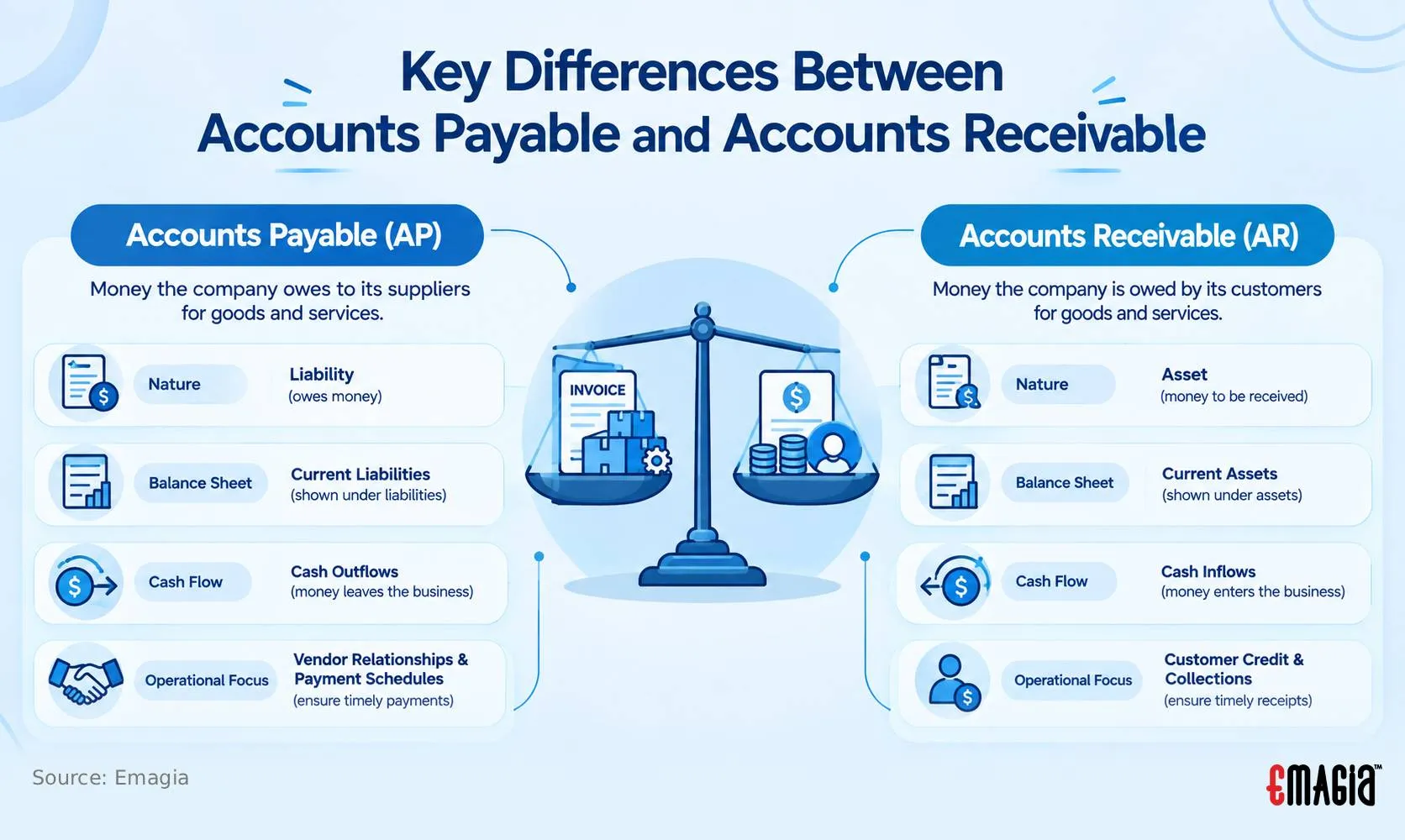
- Nature: AP is a liability, indicating amounts owed to suppliers, whereas AR is an asset, representing amounts owed by customers.
- Balance Sheet Placement: AP appears under current liabilities, while AR is listed under current assets.
- Impact on Cash Flow: AP management focuses on outflows, ensuring timely payments to suppliers. AR management concentrates on inflows, aiming for prompt collections from customers.
- Operational Focus: AP involves managing vendor relationships and payment schedules. AR entails overseeing customer credit and collection processes.
Importance of Managing Accounts Payable
Proper AP management is crucial for:
- Maintaining Supplier Relationships: Timely payments foster trust and may lead to favorable credit terms.
- Cash Flow Optimization: Strategically scheduling payments helps manage cash reserves effectively.
- Avoiding Penalties: Adhering to payment terms prevents late fees and interest charges.
Importance of Managing Accounts Receivable
Effective AR management contributes to:
- Ensuring Liquidity: Prompt collections enhance cash availability for operational needs.
- Reducing Bad Debts: Monitoring customer creditworthiness minimizes the risk of non-payment.
- Financial Planning: Accurate AR data supports forecasting and budgeting efforts.
Best Practices for Accounts Payable Management
- Implement Automation: Utilize accounting software to streamline invoice processing and approvals.
- Maintain Accurate Records: Keep detailed records of all transactions to ensure transparency and facilitate audits.
- Establish Clear Policies: Define payment terms and approval hierarchies to standardize processes.
Best Practices for Accounts Receivable Management
- Prompt Invoicing: Issue invoices immediately after delivering goods or services.
- Regular Follow-Ups: Monitor outstanding invoices and send timely reminders to customers.
- Credit Assessments: Evaluate customer creditworthiness before extending credit to mitigate risks.
How Emagia Enhances AP and AR Processes
Emagia offers advanced solutions to optimize both accounts payable and accounts receivable operations. By leveraging artificial intelligence and automation, Emagia’s platform enables businesses to:
- Streamline Workflows: Automate routine tasks, reducing manual errors and increasing efficiency.
- Enhance Visibility: Gain real-time insights into cash flow and outstanding obligations or receivables.
- Improve Decision-Making: Utilize predictive analytics to forecast payment behaviors and manage risks effectively.
Frequently Asked Questions
What are accounts payable and receivable examples?
Accounts payable examples include amounts owed to suppliers for inventory purchases. Accounts receivable examples encompass invoices issued to customers for services rendered.
Are accounts payable debits or credits?
Accounts payable typically have a credit balance, reflecting the company’s obligation to pay its suppliers.
What are accounts payable in simple words?
Accounts payable represent the money a company owes to its suppliers for goods or services received on credit.
How can I tell if my business is profitable?
Subtract total liabilities, including accounts payable, from total assets, including accounts receivable. A positive result indicates profitability.
By comprehensively understanding and effectively managing accounts payable and accounts receivable, businesses can ensure financial stability, foster strong relationships with stakeholders, and position themselves for sustained growth.