Credit Risk Assessment Software | Comprehensive Guide to AI, Automation, and B2B Credit Risk Management
Credit risk assessment software has become an essential tool for modern finance and accounts receivable teams, enabling businesses to identify, analyze, and mitigate credit risk effectively. By leveraging AI credit risk assessment, automated credit risk tools, and predictive credit analytics, organizations can accelerate credit approvals, reduce bad debt risk, and improve DSO metrics. Integrating this software into AR and O2C workflows ensures that credit decisions are consistent, data-driven, and aligned with overall financial strategy. This guide will explore the functionalities, benefits, and applications of credit risk assessment software for B2B companies, finance teams, and credit managers.
Understanding Credit Risk Assessment Software
Credit risk assessment software provides businesses with the tools to measure and manage the likelihood of customer defaults. It analyzes historical payment behavior, financial ratios, and external credit data to generate actionable insights. Companies using these platforms gain a structured approach to evaluate creditworthiness, assign dynamic credit limits, and monitor risk continuously. Such software also enables integration with ERP credit risk modules, API credit data exchange, and real-time credit monitoring, offering a comprehensive risk management solution that improves decision-making and reduces exposure across the entire customer portfolio.
Definition and Purpose
Credit risk assessment software is designed to assess the financial health and repayment capacity of customers, providing automated workflows and predictive analytics to mitigate credit risk. The software evaluates internal AR data, external credit scores, and payment trends to produce a risk score or rating for each customer. This systematic approach allows credit teams to make informed decisions, set credit limits, approve orders faster, and reduce bad debt risk. Its purpose is not just risk identification but also proactive risk management, ensuring companies maintain liquidity while fostering growth through safe credit extension practices.
Importance in Modern Credit Management
In today’s complex B2B environment, delayed payments, high-value transactions, and global customer bases increase exposure to credit risk. Credit risk assessment software enhances traditional credit management by providing real-time monitoring, scenario analysis, and stress testing of portfolios. Finance teams can identify trends, detect high-risk accounts early, and implement strategies to reduce defaults. Incorporating AI and automation ensures faster decision-making and improves the efficiency of AR credit risk integration, allowing organizations to maintain a healthy cash flow and strengthen operational resilience in a competitive marketplace.
Core Features of Credit Risk Assessment Software
The most effective credit risk assessment software offers a suite of features designed to streamline credit risk evaluation and management. Key functionalities include AI-driven risk scoring, automated credit workflows, dynamic credit limits, real-time credit monitoring, scenario analysis software, and predictive credit analytics. These features allow finance teams to evaluate creditworthiness quickly, simulate potential risk scenarios, and make proactive decisions that reduce exposure. Integration with AR and O2C processes ensures that these insights directly support operational and strategic goals, improving DSO and reducing bad debt risk while enhancing overall efficiency in credit risk management.
AI Credit Risk Assessment
AI credit risk assessment uses machine learning algorithms to analyze customer payment behavior, historical trends, and external financial data. By identifying patterns and anomalies, AI predicts potential defaults and provides actionable risk scores. This enables organizations to make faster, more accurate credit decisions, prioritize high-risk accounts, and optimize AR operations. Additionally, AI facilitates adaptive learning, continuously improving the accuracy of risk predictions and enabling credit teams to respond proactively to changing market conditions or customer behavior.
Automated Credit Risk Tools
Automated credit risk tools streamline repetitive tasks such as credit scoring, credit limit checks, and workflow approvals. By reducing manual intervention, these tools increase efficiency, consistency, and speed in credit risk management processes. Automation also ensures compliance with internal policies and regulatory requirements while providing timely insights for proactive risk mitigation. Integrating these tools with ERP credit risk modules and B2B credit risk platforms allows organizations to centralize risk monitoring and enhance decision-making across the entire customer portfolio.
Predictive Credit Analytics
Predictive credit analytics leverages historical data and statistical models to forecast future credit behavior and potential risk scenarios. This approach enables finance teams to anticipate defaults, optimize credit limits, and adjust strategies to mitigate exposure. By simulating various market conditions, predictive analytics supports stress testing credit risk and scenario analysis, helping organizations maintain financial stability. Combining predictive insights with automated credit workflows ensures that credit risk decisions are proactive, data-driven, and aligned with business objectives, improving cash flow and reducing operational risk.
Integration with AR and O2C Processes
Integrating credit risk assessment software into accounts receivable (AR) and order-to-cash (O2C) processes ensures that risk evaluation informs operational decisions directly. This integration allows for real-time credit monitoring, faster approvals, and dynamic adjustment of credit limits based on payment behavior and exposure. Companies can monitor portfolio risk continuously, automate credit approval workflows, and reduce defaults by acting promptly on potential high-risk accounts. Seamless integration also enhances collaboration between finance, sales, and credit teams, creating a unified approach to credit management and supporting stronger financial performance.
Real-Time Credit Monitoring
Real-time credit monitoring provides immediate insights into customer exposure, overdue accounts, and portfolio risk. By integrating with ERP modules and B2B credit risk platforms, organizations can detect high-risk situations promptly and take preventive measures. Real-time monitoring enables dynamic adjustment of credit limits, proactive communication with customers, and automation of follow-up actions, ensuring that credit risk is continuously managed and AR performance is optimized. This approach minimizes the likelihood of defaults and improves DSO metrics, strengthening the organization’s financial resilience.
Dynamic Credit Limits
Dynamic credit limits allow organizations to adjust customer credit thresholds based on real-time risk data, payment history, and portfolio exposure. This flexibility ensures that businesses can extend credit responsibly while minimizing the risk of defaults. Automated credit risk workflows linked to dynamic credit limits facilitate faster approvals, reduce administrative effort, and improve customer satisfaction. Implementing dynamic limits supports proactive risk management, allowing finance teams to respond quickly to changes in market conditions, customer behavior, or creditworthiness assessments.
Scenario Analysis and Stress Testing
Scenario analysis and stress testing simulate potential adverse events and assess their impact on credit portfolios. This functionality allows organizations to evaluate the resilience of their AR and credit management strategies under varying economic conditions. By anticipating potential risks, finance teams can implement mitigation measures such as adjusting credit policies, limiting exposure to high-risk accounts, and optimizing collection strategies. Integrating scenario analysis with predictive credit analytics ensures that credit decisions are informed, data-driven, and aligned with the organization’s risk appetite.
Benefits of Using Credit Risk Assessment Software
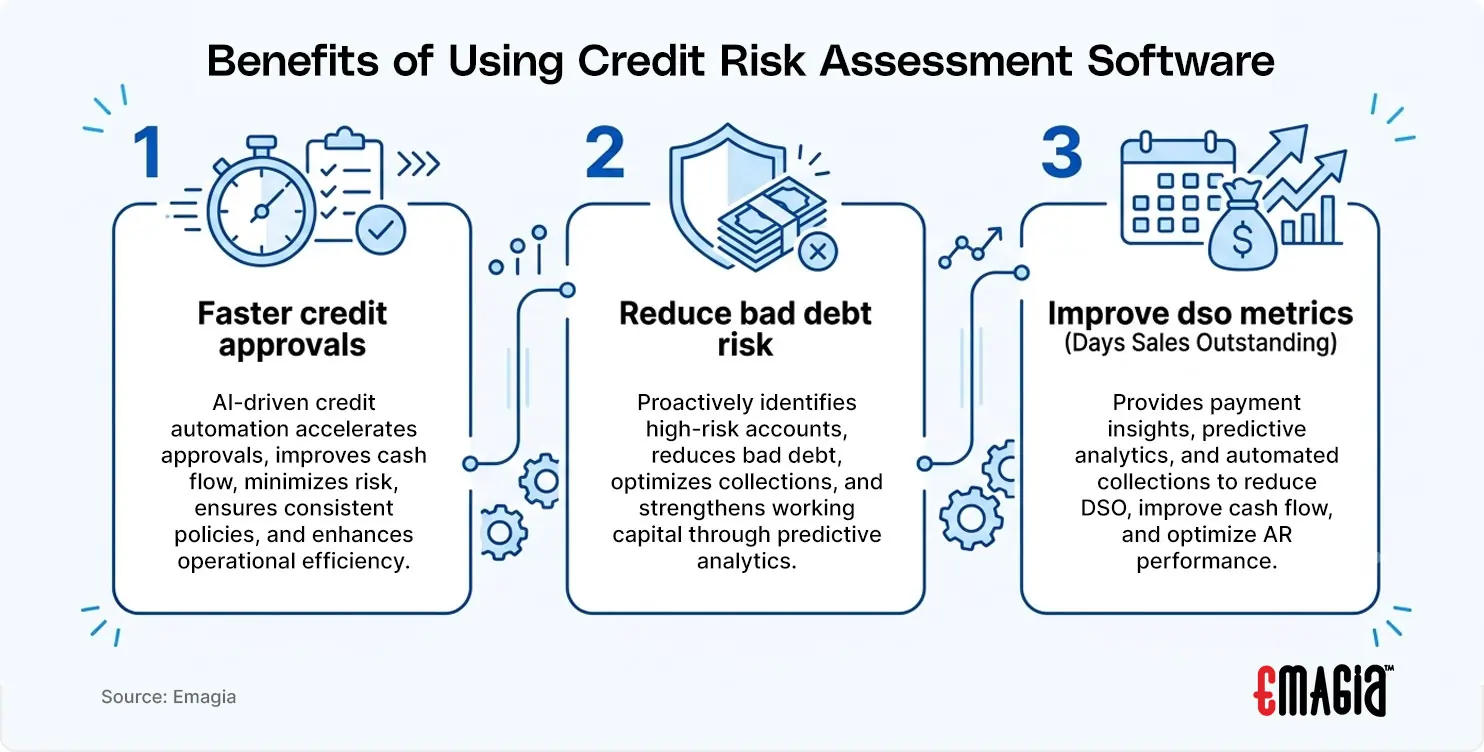
Implementing credit risk assessment software provides numerous operational and financial benefits. Companies experience faster credit approvals, improved DSO metrics, reduced bad debt risk, and enhanced AR credit risk integration. The software enables automated workflows, predictive analytics, and real-time monitoring, leading to more accurate and timely credit decisions. Organizations also gain better visibility into portfolio risk, streamline O2C risk management, and leverage AI to optimize credit strategies. Overall, adopting credit risk assessment software strengthens financial stability, supports operational efficiency, and allows for informed, proactive management of customer credit risk.
Faster Credit Approvals
Automating credit evaluation and leveraging AI-driven insights accelerates credit approvals, reducing delays in the order-to-cash process. Faster approvals enhance customer experience, improve cash flow, and allow sales teams to operate without unnecessary bottlenecks. By combining automated credit risk tools, dynamic credit limits, and predictive analytics, organizations can make informed decisions quickly while mitigating exposure to high-risk accounts. This streamlined approach ensures that credit policies are consistently applied and that operational efficiency is maximized.
Reduce Bad Debt Risk
Credit risk assessment software enables proactive identification of high-risk accounts, allowing finance teams to take preventive measures such as adjusting credit limits, implementing stricter terms, or prioritizing collection efforts. Automated monitoring and predictive analytics reduce the likelihood of defaults, ensuring that AR portfolios remain healthy. By reducing bad debt risk, organizations can improve working capital, maintain liquidity, and achieve greater financial stability. Additionally, continuous portfolio risk monitoring ensures that emerging risks are detected and managed effectively.
Improve DSO Metrics
The software provides insights into payment trends and overdue accounts, enabling organizations to optimize collection strategies and reduce days sales outstanding (DSO). Improved DSO enhances cash flow predictability and strengthens liquidity for operational needs and investments. By integrating AR credit risk management, automated workflows, and predictive analytics, businesses can proactively manage customer accounts, prioritize collections, and improve overall AR performance. This results in a more efficient order-to-cash cycle and better alignment with financial objectives.
How Emagia Enhances Credit Risk Management
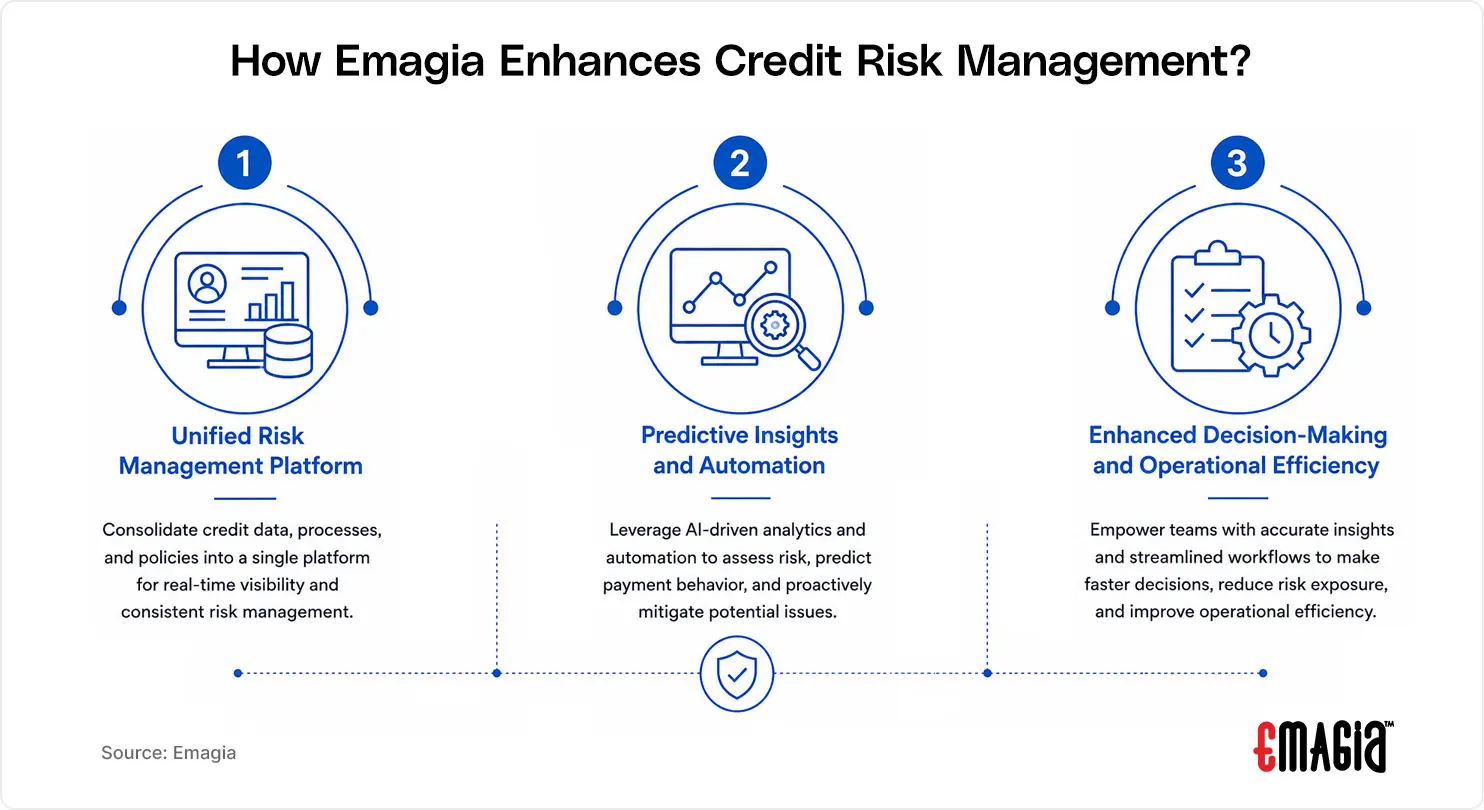
Unified Risk Management Platform
Emagia provides a centralized credit risk management platform that integrates AR, O2C, and ERP data, offering a complete view of portfolio exposure and customer risk. This unified platform enables real-time monitoring, dynamic credit limit adjustments, and proactive risk mitigation. By combining automated workflows with AI-driven credit scoring, Emagia ensures that credit decisions are consistent, accurate, and aligned with the company’s risk appetite, reducing defaults and improving cash flow efficiency.
Predictive Insights and Automation
Emagia leverages predictive analytics to forecast credit risk, identify high-risk accounts, and simulate adverse scenarios. Automated workflows streamline approvals, notifications, and follow-up actions, reducing administrative burden and accelerating credit decisions. These capabilities allow organizations to respond proactively to emerging risks, optimize credit strategies, and enhance AR performance. Predictive insights also support portfolio risk monitoring, ensuring that businesses maintain financial stability and minimize exposure to bad debt.
Enhanced Decision-Making and Operational Efficiency
With Emagia, credit managers gain actionable insights to make informed decisions, prioritize high-risk accounts, and improve collection strategies. The platform’s real-time monitoring and AI-driven scoring ensure faster approvals, reduced DSO, and improved cash flow. By integrating credit risk assessment software into daily operations, organizations can streamline AR and O2C processes, enhance operational efficiency, and strengthen overall financial health.
Frequently Asked Questions
What is credit risk assessment software?
Credit risk assessment software is a platform that evaluates customer creditworthiness, predicts defaults, and manages exposure. It leverages AI, automated workflows, predictive analytics, and integration with AR and O2C systems to reduce bad debt risk and improve DSO metrics.
How does AI enhance credit risk assessment?
AI improves accuracy in risk scoring, identifies patterns in payment behavior, predicts potential defaults, and enables proactive decision-making. It allows organizations to automate credit approvals and adjust credit limits dynamically based on real-time insights.
Can credit risk software reduce bad debt?
Yes, by continuously monitoring customer behavior, identifying high-risk accounts, and enabling proactive risk mitigation measures, credit risk software reduces the likelihood of defaults and strengthens portfolio management.
What are the benefits of integrating credit risk software with AR and O2C?
Integration ensures real-time monitoring, faster approvals, dynamic limit adjustments, and enhanced operational efficiency. It allows organizations to reduce DSO, improve cash flow, and maintain consistent risk management practices across the order-to-cash cycle.
How do predictive analytics support credit risk management?
Predictive analytics forecast potential defaults, simulate scenarios, and identify trends in customer behavior. These insights allow finance teams to take proactive measures, optimize credit policies, and reduce exposure to high-risk accounts.


