Introduction
In the dynamic landscape of the food and beverage industry, managing financial deductions is a critical yet complex task. Deductions—reductions in the amount payable by customers due to various disputes or agreements—can significantly impact a company’s cash flow and profitability. The advent of automation offers transformative solutions to streamline deduction management, enhancing efficiency and accuracy. This comprehensive article explores the multifaceted impact of automation on deduction management within the food and beverage sector.
Understanding Deduction Management in the Food Beverage Industry
What Are Deductions?
Deductions refer to amounts subtracted from a customer’s payment, often arising from disputes over pricing, promotions, shortages, damages, or compliance issues. In the food and beverage industry, these deductions can be frequent and varied, posing challenges to accounts receivable departments.
Common Types of Deductions
- Trade Promotions: Discounts offered to retailers to promote products.
- Pricing Discrepancies: Differences between invoiced amounts and agreed-upon prices.
- Shortages and Damages: Claims for missing or damaged goods upon delivery.
- Compliance Violations: Penalties for not adhering to retailer guidelines or regulations.
Challenges in Traditional Deduction Management
Manual deduction management is labor-intensive and prone to errors. Challenges include delayed dispute resolutions, inadequate tracking, and strained customer relationships. These issues can lead to financial losses and operational inefficiencies.
The Role of Automation in Deduction Management
Introduction to Automation Technologies
Automation in deduction management involves the use of advanced technologies such as Artificial Intelligence (AI), Machine Learning (ML), and Robotic Process Automation (RPA) to streamline processes. These technologies can handle repetitive tasks, analyze large datasets, and make informed decisions, reducing the reliance on manual intervention.
Benefits of Automation in Deduction Management
- Increased Efficiency: Automation accelerates the processing of deductions, reducing the time required for resolution.
- Enhanced Accuracy: Automated systems minimize human errors, ensuring precise deduction handling.
- Improved Cash Flow: Faster resolution of deductions leads to better cash flow management.
- Data-Driven Insights: Automation provides analytics to identify patterns and root causes of deductions, facilitating proactive measures.
Implementing Automation in Deduction Management
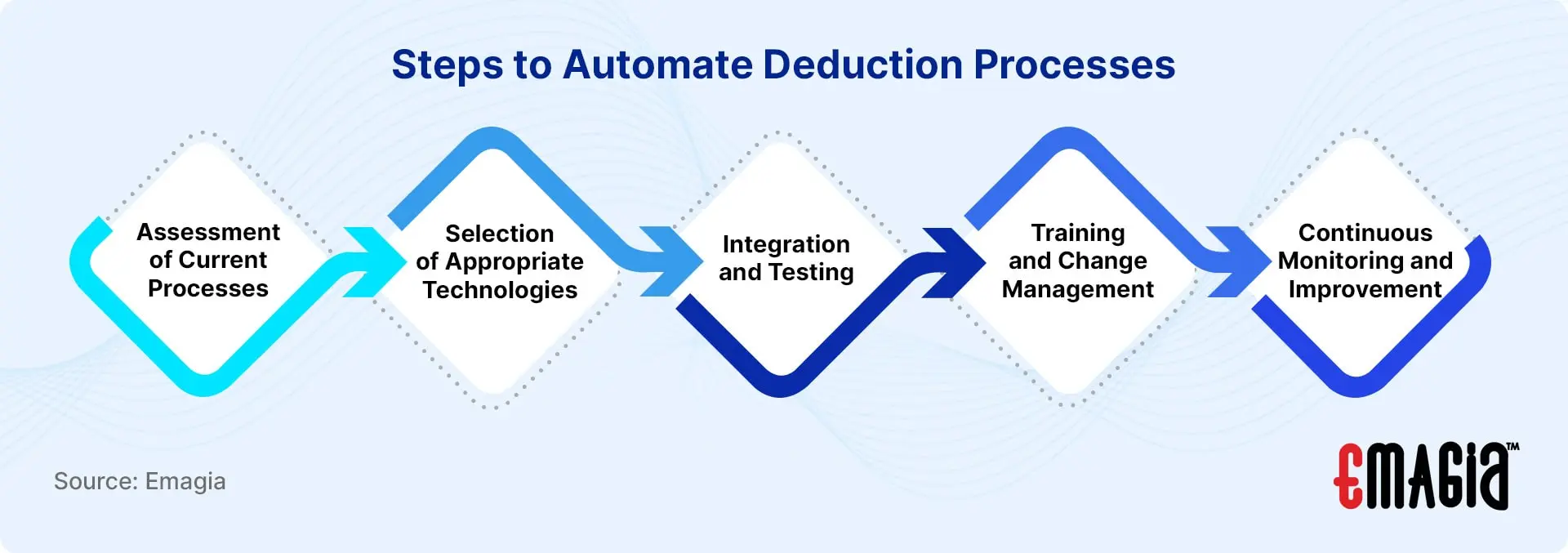
Steps to Automate Deduction Processes
- Assessment of Current Processes: Evaluate existing deduction management workflows to identify bottlenecks and inefficiencies.
- Selection of Appropriate Technologies: Choose automation tools that align with the company’s specific needs and integrate seamlessly with existing systems.
- Integration and Testing: Implement the chosen solutions and conduct thorough testing to ensure functionality and compatibility.
- Training and Change Management: Educate staff on new systems and manage the transition to automated processes effectively.
- Continuous Monitoring and Improvement: Regularly monitor the performance of automated systems and make necessary adjustments for optimization.
Key Features of Automated Deduction Management Systems
- Automated Claim Detection: Identifies and flags deductions as they occur.
- Root Cause Analysis: Analyzes data to determine underlying causes of deductions.
- Workflow Automation: Streamlines the approval and resolution processes.
- Real-Time Reporting: Provides up-to-date insights into deduction statuses and trends.
- Integration Capabilities: Seamlessly connects with existing Enterprise Resource Planning (ERP) and Customer Relationship Management (CRM) systems.
How Emagia Enhances Deduction Management in the Food Beverage Industry
AI-Powered Automation
Emagia’s platform leverages AI to automate the detection and classification of deductions, reducing manual intervention and accelerating resolution times. The system intelligently categorizes deductions based on predefined criteria, ensuring that each case is handled appropriately.
Real-Time Analytics and Reporting
With robust reporting tools, Emagia provides real-time insights into deduction trends and root causes. This data-driven approach enables companies to implement corrective actions promptly, minimizing the recurrence of similar issues.
Seamless Integration
Emagia’s solutions are designed to integrate seamlessly with existing ERP and CRM systems, ensuring a smooth transition to automated processes without disrupting current operations. This compatibility enhances data consistency and process efficiency across the organization.
Enhanced Customer Relationships
By streamlining deduction management, Emagia helps companies resolve disputes swiftly, leading to improved customer satisfaction and stronger business relationships. The platform’s efficiency allows customer service teams to focus more on value-added activities rather than administrative tasks.
Frequently Asked Questions
What Are the Main Causes of Deductions in the Food Beverage Industry?
The primary causes of deductions include trade promotions, pricing discrepancies, shortages, damages, compliance violations, and unauthorized chargebacks. These issues often arise due to miscommunications, logistical challenges, or incorrect invoicing.
How Does Automation Reduce Deduction Processing Time?
Automation streamlines the identification, classification, and resolution of deductions by using AI and machine learning algorithms. This eliminates manual data entry, speeds up claim verification, and provides real-time insights for quicker dispute resolution.
What Are the Cost Benefits of Automating Deduction Management?
By reducing manual labor, preventing revenue leakage, and minimizing disputes, automation lowers operational costs. Companies experience improved cash flow, reduced write-offs, and better financial forecasting.
Can Automation Help Prevent Unauthorized Deductions?
Yes, automated systems can detect unauthorized deductions by cross-checking claims against predefined rules. Alerts and workflows ensure that only valid deductions are processed, preventing financial losses.
How Does AI Improve Deduction Management in the Food Beverage Industry?
AI analyzes patterns in deduction claims, predicts potential disputes, and offers actionable insights. It also automates repetitive tasks, allowing finance teams to focus on strategic decision-making.
Is It Difficult to Integrate Deduction Automation Software With Existing Systems?
Most modern automation solutions, including those from Emagia, are designed to integrate seamlessly with ERP and CRM systems. This ensures smooth data flow and operational efficiency without disrupting existing processes.
How Does Automation Improve Customer Relationships?
By resolving deduction disputes quickly and accurately, automation enhances transparency and trust between suppliers and customers. It also reduces frustration and improves overall satisfaction.
What Key Features Should Businesses Look for in a Deduction Management System?
Businesses should prioritize features such as automated claim detection, workflow automation, real-time reporting, AI-driven analytics, and seamless integration capabilities.
Conclusion
Automation is revolutionizing deduction management in the food and beverage industry. By eliminating manual inefficiencies, reducing errors, and enhancing dispute resolution, businesses can improve cash flow, reduce operational costs, and strengthen customer relationships. With solutions like Emagia’s AI-powered platform, companies can transform their deduction management processes, ensuring greater accuracy and efficiency in financial operations.